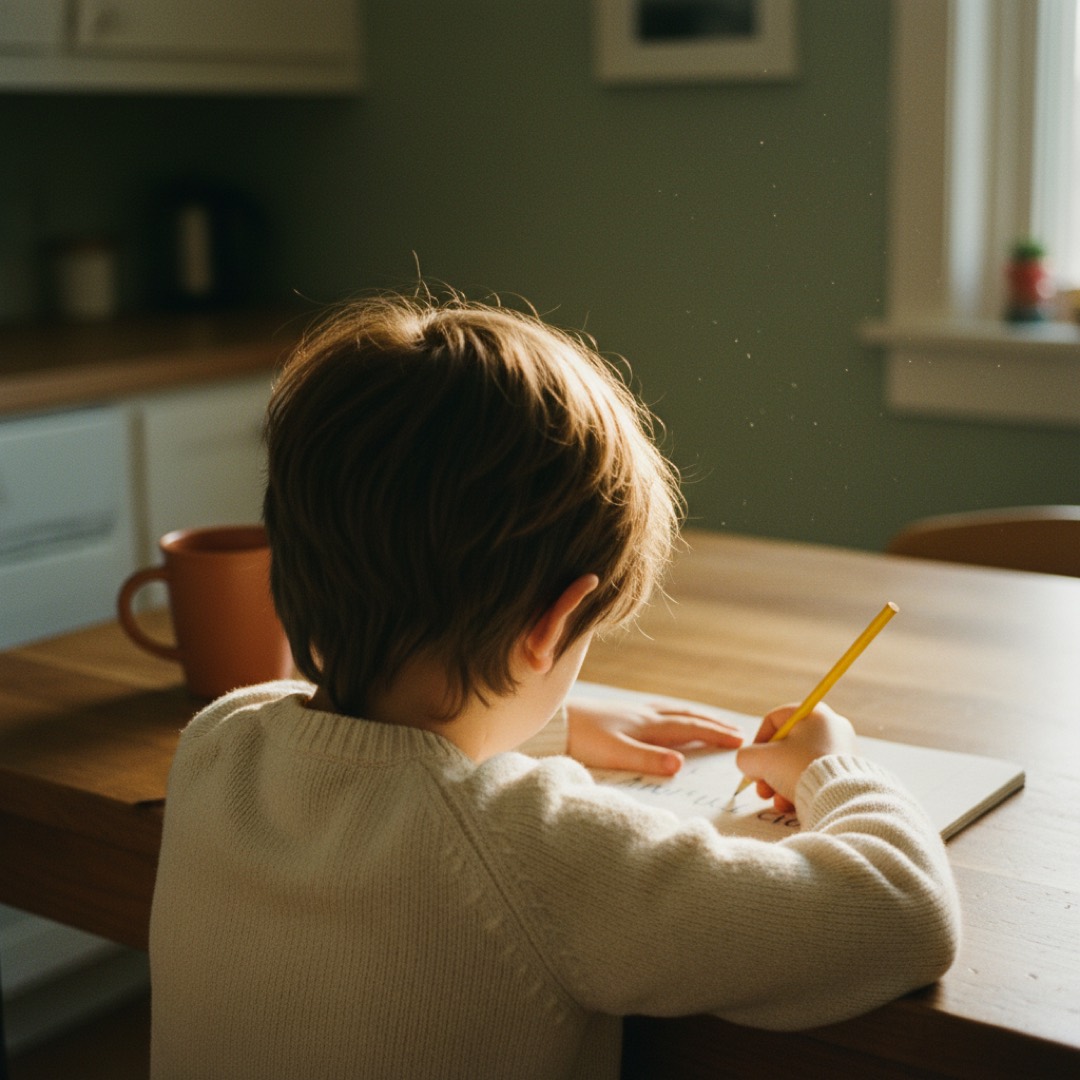
See what their school is missing
Most kids who struggle aren’t lazy or careless. They have a pattern school doesn’t test for — and it stays invisible until grades start dropping. One photo, three minutes, a path forward.
See their pattern →3 minutes · no signup · photo deleted in 24h
Built because school isn’t looking
US schools haven’t run a national writing assessment since 2011. 77% of teachers say handwriting has gotten worse since 2019. Almost none of the underlying patterns get formally screened.
Parents notice years before any system does — but they get generic advice (“more practice”) for problems that need specific intervention. That’s the gap Symmetry closes.
Take a photo. Three minutes later you have a parent-readable pattern name, a side-by-side with thousands of similar profiles, and a 12-week plan reviewed weekly by a real specialist.
Three minutes from photo to plan

“I read every Sunday report personally. By Tuesday morning you’ll have a one-paragraph note: what shifted, what to tighten, and one specific question to ask your child this week.”
Most-asked questions
Is this a diagnosis?+
No. Symmetry identifies functional handwriting and behaviour patterns — useful for parents, teachers and clinicians as a starting point. A formal diagnosis still requires a licensed evaluator.
What ages does this work for?+
Children 5–13. The patterns we look for shift across that range — kindergarten word-boundary issues look different from 11-year-old executive-function strain.
What happens to the photo?+
Used to generate your report, then auto-deleted within 24 hours. The AI reads letter shapes, never your child's words. Stored only in US data centres, never used to train any model.
Who reviews the weekly progress?+
Maya Chen, M.S. — Educational Psychologist with 11 years of pediatric practice. She personally reads each Sunday report and sends a one-paragraph note by Tuesday.
How is this different from a tutor?+
Tutors teach more. We address the underlying handwriting/attention pattern that makes content not stick. Most kids need both eventually — we help you stop wasting tutor money on the wrong layer.